
QuizApp: Quiz & Trivia Network
Cranberry AppsTrivia
4.26.00 Reviews
- Version
- 1.3.1
- Installs
- 100.00K
- Age Rating
- Everyone
Screenshots
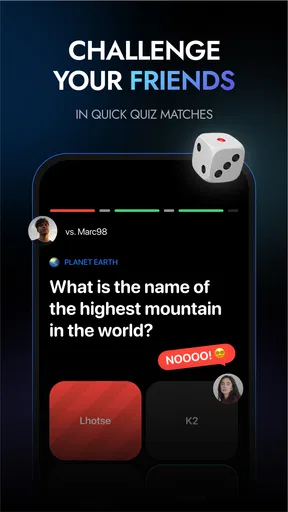
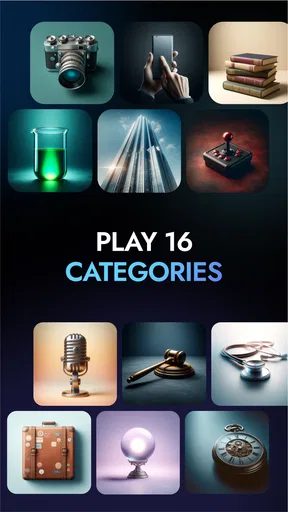
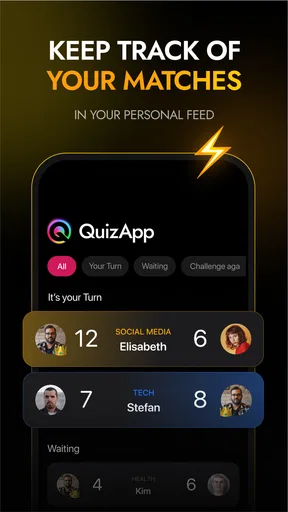
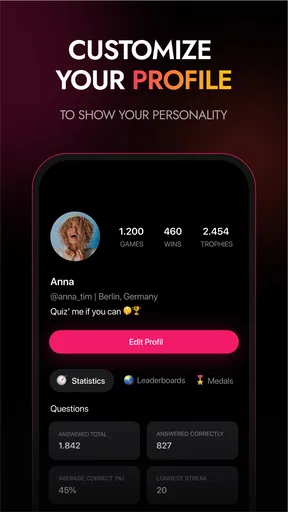
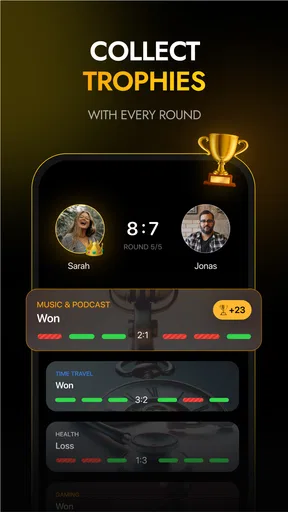
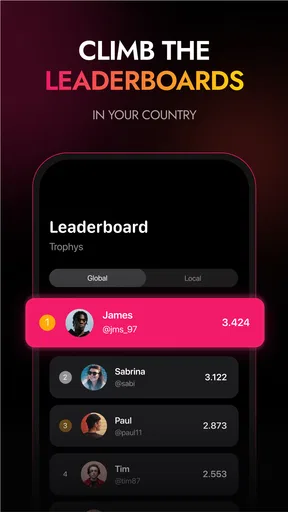

Our Review of QuizApp: Quiz & Trivia Network
 Analysis by Appyee
I spent my first sessions with QuizApp: Quiz & Trivia Network treating it as a quick way to fill small gaps in the day rather than as a game I needed to study. That is the right mindset for this trivia title from Cranberry Apps. It is free to start, aimed at Everyone, and built around quiz duels and knowledge questions, so the appeal is immediate: open it, answer, and see how your general knowledge holds up.
My first impression was positive because the idea needs very little explanation. There is no complicated world to learn, no character build to manage, and no long tutorial standing between me and the questions. I could use it while waiting for an appointment, during a short break, or when I wanted something more active than scrolling. The basic loop is easy to understand, which makes the game approachable for casual players and families.
That simplicity is also the central question for anyone considering a download: does the quick quiz format remain enjoyable once the novelty wears off? After looking at the experience from that angle, I see a game with a useful place in a trivia fan’s routine, but not one that will automatically become a permanent daily habit for everyone.
Why the first week feels so accessible
The strongest part of the opening week is the low commitment. A trivia duel gives each session a clear purpose, and the short-question format makes it easy to stop after one round without feeling that I have abandoned a larger adventure. That matters on a phone, where many games compete with interruptions and limited attention.
I also like that the game does not require me to be an expert before I begin. Trivia works best when it mixes confidence with uncertainty. I can recognize some questions immediately, hesitate over others, and still feel involved because every answer tests a different part of my memory. That variety is more engaging than a quiz that only rewards a narrow specialist subject.
For a newcomer, I would recommend playing several short sessions before deciding whether the question style suits you. One lucky or unlucky round is not enough to judge a trivia game. The experience depends heavily on whether the topics feel fair to you and whether the duel format gives you a satisfying reason to continue after a wrong answer.
The social framing also gives ordinary questions more tension. I pay closer attention when I feel that I am answering against another person or another result rather than simply completing a private practice sheet. That competitive pressure can be motivating, especially for players who normally abandon solo quiz apps after a few minutes.
There is a practical tip here: do not play only when you are tired. Trivia rewards concentration, and a rushed answer can make the game seem less accurate or less enjoyable than it really is. I got more value from using it during a deliberate five-minute break than from opening it while multitasking.
The game’s public reception suggests that this straightforward approach has found an audience. It holds a 4.2 average from around 1.4 thousand ratings and has passed 100 thousand installs. Those figures do not guarantee that every question set will match my interests, but they indicate that the concept is clear enough for many people to try and keep using.
Who gets the most from the opening experience?
I think it is particularly well suited to casual trivia players, people who enjoy friendly competition, and anyone looking for a lightweight alternative to a larger mobile game. It is also a reasonable choice for a household where different players want to challenge one another without learning a complicated ruleset.
It is less convincing for someone seeking a structured learning tool. A quiz game can exercise recall, but that does not automatically make it a course. If your main goal is language study, exam preparation, or systematic progress through a subject, a dedicated educational app will usually offer better organization and explanations.
The age rating of Everyone makes the game broadly approachable, but adults should still judge it by their own expectations. “Suitable for everyone” does not mean every question will be equally interesting to every age group. A younger player may enjoy the competition while finding some topics unfamiliar, and an experienced trivia fan may want deeper questions than a general quiz format usually provides.
What remains useful after the novelty fades
The month-to-month value depends less on a dramatic progression system and more on whether answering questions is already a habit you enjoy. That is an important distinction. I would not install this expecting a large narrative, a complex collection system, or a game world that constantly changes around me. Its recurring value comes from the repeatable act of testing knowledge.
That can be enough when the app becomes part of a specific routine. I can imagine using it after dinner with a family member, playing a few rounds during a commute, or opening it whenever I want a break that feels mentally active. The best long-term use is not “play all day”; it is “return when I have a small pocket of attention.”
To make that routine last, I would avoid turning every session into a performance test. If I treat every loss as proof that I am bad at trivia, frustration arrives quickly. A better approach is to notice which subjects repeatedly cause mistakes and use those moments as prompts for curiosity. Even without turning the game into formal study, a difficult question can lead me to look up a topic later.
Another useful workflow is to alternate competitive sessions with relaxed ones. Constantly chasing wins can make the experience feel narrow, especially when the questions do not fall into areas I know well. Switching between “I want to win” and “I want to see what appears next” keeps the game from depending entirely on the result of each duel.
Still, the long-term ceiling is clear. A trivia app needs enough freshness in its questions and enough variety in its encounters to prevent repetition from becoming obvious. Since the core action is always answering questions, players who need frequent new mechanics may move on sooner than players who enjoy the format itself.
The current release is version 1.3.1, and the game was released on October 7, 2024. For me, that makes maintenance an important part of the decision. A relatively recent title can feel lively at first, but its lasting value will depend on how consistently the question experience stays enjoyable over time. I would revisit it after updates rather than assume that one installation guarantees endless variety.
The real maintenance burden is your attention
One advantage is that the game asks for very little preparation. I do not need to build a deck, arrange a team, or remember a lengthy set of controls. That makes returning easy. If I have only a few minutes, I can start without first checking a complicated inventory or planning a strategy.
The burden comes from deciding when to stop. Trivia duels are naturally easy to repeat because each round offers another chance to recover from a loss. That can be satisfying, but it can also turn a short break into a longer session without providing much extra value. I found it helpful to decide in advance whether I was playing one duel or several.
There is also a financial point to keep in mind. The game is free, while in-app purchases are listed at $3.49 per item. That does not make the free experience unattractive, but it means I would check what an optional purchase changes before paying. For a casual player, the free entry point is the main strength; for a regular player, the question is whether spending improves the experience enough to justify becoming more invested.
I would not buy anything simply because a losing streak feels irritating. That is the wrong reason to spend money in a trivia game. First decide whether you enjoy the questions and the duel rhythm without paying. If the base loop is not holding your attention, an optional purchase is unlikely to solve the underlying problem.
Device access is reasonably broad because the minimum operating system is Android 8.0. That makes the game relevant to people who are not using the newest phone, although actual comfort will still depend on the device and the player’s preferences. On iOS or Android, I would focus less on technical ambition and more on whether the screen, pacing, and question presentation feel comfortable during short sessions.
Where fatigue begins to appear
The first source of fatigue is repetition. Even when the questions themselves change, the mental pattern remains familiar: read, decide, answer, react, repeat. That is the appeal during a quick break, but it can become mechanical during a long session. I would keep play sessions short if the game starts feeling like a checklist rather than a challenge.
The second is uneven confidence. A round can feel exciting when I know enough to make fast decisions, but less satisfying when several questions land outside my experience. Trivia is inherently uneven because knowledge is personal. The important test is whether I still feel curious after missing an answer, rather than merely annoyed by it.
Competition can create another kind of pressure. Some players enjoy the urgency of a duel, while others prefer to think carefully without feeling watched or compared. If you want a calm, self-paced quiz, this may not be the best fit. A solo trivia alternative with explanations, topic selection, or progress tracking could serve you better.
I also see a trade-off between convenience and depth. The quick format makes the game easy to pick up, but it may not satisfy someone who wants detailed reasoning after every response. When I want to understand why an answer is correct, I prefer an educational reference or a dedicated learning resource alongside the game. QuizApp works better as a test of recall than as a complete lesson.
Another practical limitation is motivation after a poor run. The game’s format encourages another attempt, but repeated losses can make that attempt feel like repair work. My advice is to stop while the experience is still light. Returning later with a clear head is more enjoyable than forcing a win immediately.
Players should also be realistic about personalization. A general trivia game cannot perfectly match every interest, age, or knowledge level. If you only want cinema, sports, science, history, or another single field, a specialized quiz app will probably feel more relevant. This game makes more sense when you enjoy being surprised by the subject as much as proving what you already know.
How it compares with familiar trivia alternatives
Compared with a standard flashcard app, this game is more entertaining and less methodical. Flashcards are better when I want deliberate repetition and measurable study. The duel structure here adds urgency, but it does not replace a planned revision system.
Compared with a crossword or word puzzle, the experience depends more on stored knowledge than on deduction. A crossword can let me work toward an answer through clues and letter patterns; a trivia question may simply ask whether I know the fact. That makes this a better choice for quick recall and a weaker choice for players who prefer solving through gradual evidence.
Compared with a large multiplayer game, the attraction is its low barrier to entry. There is less to manage and less time to invest. The trade-off is that the game may not provide the same sense of progression or long-term identity. I would choose it when I want a compact challenge, not when I want my phone to host a major ongoing hobby.
Compared with a quiz show watched on television, this format gives me direct control and immediate participation. I am not waiting for someone else to answer. On the other hand, it lacks the shared atmosphere of a room full of people reacting together, unless I deliberately make it part of a group routine.
My long-term verdict for different kinds of players
After the first-week excitement settles, I think the game earns a place on a phone when its owner genuinely likes trivia in small doses. Its lasting strength is convenience: it turns a spare moment into a compact mental contest without demanding a large time commitment. That is a meaningful use case, especially for people who want a break from passive feeds.
I would recommend it to casual quiz fans, families looking for simple competition, and players who enjoy testing broad general knowledge. The free starting point makes experimentation easy, and the Everyone rating keeps the audience broad. Cranberry Apps has chosen a format that communicates its purpose quickly, which is exactly what a lightweight trivia game needs.
I would skip it if you need formal teaching, deep explanations, a single specialized subject, or a complex progression system. I would also be cautious if competitive question answering tends to make you frustrated rather than curious. In those cases, a flashcard tool, a focused educational app, or a slower puzzle game will probably offer more lasting value.
My practical recommendation is to install it for short sessions, play without rushing into purchases, and judge it by whether you still want another round after the initial curiosity disappears. Set a natural stopping point, pay attention to which topics keep you interested, and use difficult questions as invitations to learn elsewhere rather than as reasons to chase losses.
For me, QuizApp: Quiz & Trivia Network is not an all-purpose replacement for every kind of knowledge game. It is a straightforward trivia companion whose value comes from repeatable, low-commitment challenges. The novelty may fade, but the app can remain useful if you treat it as a pocket-sized habit rather than an endless main game. That is a modest promise, yet it is an honest one—and for the right player, it is enough.
Verdict
Strengths of QuizApp: Quiz & Trivia Network
- Large variety of trivia topics for different interests
- Quick rounds make it easy to play during short breaks
- Competitive format adds motivation to keep improving
- Useful for testing general knowledge in an entertaining way
- Online network can make quizzes feel more social
Limitations of QuizApp: Quiz & Trivia Network
- Question difficulty and accuracy may vary between categories
- Requires an internet connection for some features
- Competitive elements may feel stressful for casual players
- Repeated questions can reduce long-term replay value
- Notifications or ads may interrupt the quiz experience
Similar Picks in This Category
View All
Millionaire 2026 Quiz & Trivia
Quiz & Trivia Games by Submarine Apps4.5

Brain Test 2: Tricky Stories
Unico Studio4.7

Trivia Crack: Brain Quiz Games
etermax4.4

QuizzLand. Quiz & Trivia game
Quiz & Trivia Games by Mno Go Apps4.8

Brain Test: Tricky Puzzles
Unico Studio4.7

Logo Quiz
bubble quiz games4.5
Frequently Asked Questions
What is QuizApp: Quiz & Trivia Network?
QuizApp: Quiz & Trivia Network is a trivia platform designed for users who enjoy testing their knowledge across different subjects. After exploring the app, its main experience centers on answering quiz questions, checking results, and comparing performance with other players. Topics, difficulty levels, and available modes may vary depending on the current version, so users should review the in-app categories before starting.
What subjects and quiz categories are available in QuizApp?
The app is intended to offer a broad selection of trivia categories, potentially covering areas such as history, science, entertainment, sports, geography, and general knowledge. The exact selection can change as new quizzes are added or community content is updated. If you are downloading it for a specific topic, check the category list and recent app information first, since availability may differ by region or version.
Can I play QuizApp: Quiz & Trivia Network with other people?
QuizApp: Quiz & Trivia Network includes a social and competitive focus, making it suitable for users who want more than a solo question-and-answer session. Depending on the available features, you may be able to compare scores, participate in challenges, or interact with a wider trivia network. Some multiplayer or ranking functions may require an account, an internet connection, or active opponents.
Does QuizApp require an internet connection or account?
An internet connection is likely important for accessing updated quizzes, synchronizing scores, viewing rankings, and using network-based features. Some content may work offline, but this depends on how the current version handles downloaded questions. Registration may also be requested for saving progress or joining social features. Before downloading, review the app’s permissions and privacy information if account creation is a concern.
Is QuizApp: Quiz & Trivia Network free to download and use?
The application may be available as a free download, but free access does not always mean every feature is completely unrestricted. Trivia apps commonly include advertising, optional purchases, subscriptions, or locked content. Check the official Google Play Store or Apple App Store listing for the current pricing model, supported devices, and in-app purchase details. This is especially important if children will be using the app.
Play our best games!


